Skip to content

DevOps as a Service · Chennai, India

DevOps as a Service for teams in Chennai

Chennai product and operations teams often sit between manufacturing discipline and software that has to last. We design and build systems that operators can run — APIs, admin, and the unglamorous work after launch — without dressing a remote studio as a local branch. Hours already match. Scope stays written. A managed DevOps practice on your stack — pipelines, environments, and incident windows owned as a service, not a one-off project that goes quiet after week four.

Onboarding typically 1–2 weeks after access; then an ongoing retainer. Cadence agreed before we take the wheel.

Chennai is IST. Delivery, reviews, and incident windows run on the same working day as your engineering team.

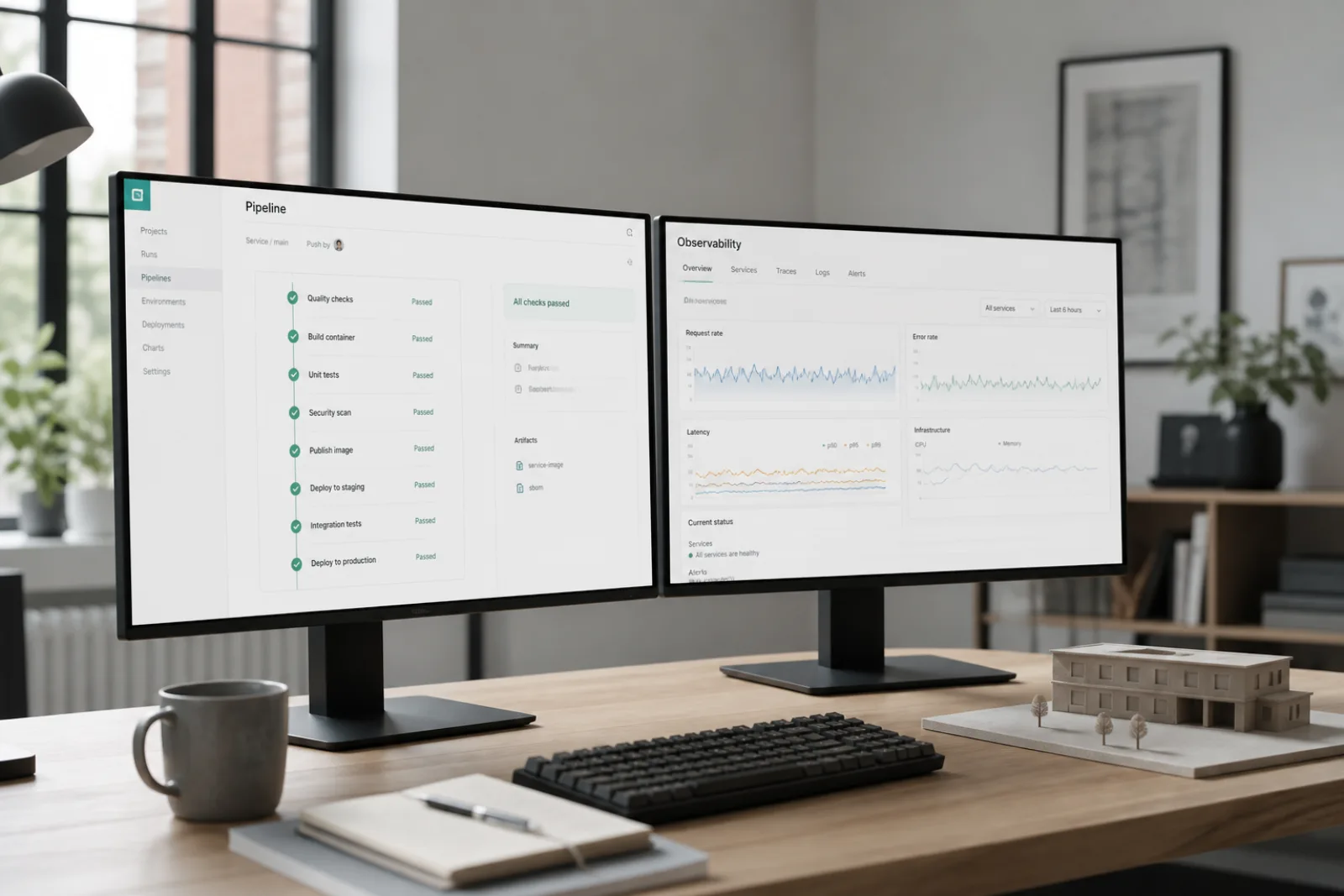
Managed DevOps operations desk with CI pipelines and observability

Problem

A pipeline nobody operates is still a bus factor.

Standing up CI/CD is not the same as owning it. Alerts fire into a void, certificates expire, and the engineer who remembered the promotion path has already moved on.

Hiring a full SRE bench for a product that ships weekly is often the wrong shape. You need operating cadence — not a six-month platform rewrite.

Solution

We run the delivery system. You keep the product.

DevOps as a Service is a retainer: we operate pipelines, environments, secrets, and observability on an agreed cadence — with incident help inside written windows.

It is not a rename of a two-week CI setup, and it is not unlimited on-call. If the foundation is missing, we say so and point at a DevOps build first.

Who this is for

A fit when the problem looks like this.

  • Product teams that already ship and need someone to own the rails — not another project kickoff
  • Companies that cannot justify a full SRE hire but still have production software
  • Studios whose last DevOps engagement left runbooks nobody updates
  • Operators who want incident windows in writing, not a Slack channel that goes quiet at 6pm

Capabilities

What we deliver in this practice.

  • Ongoing ownership of CI/CD pipelines and promotion paths
  • Environment hygiene (dev / staging / production) as they drift
  • Secrets, certificates, and dependency/platform upgrades on the delivery stack
  • Observability follow-through — alerts that get a response, not a dashboard nobody opens
  • Incident assistance inside agreed windows
  • Capacity and cost signals on the infrastructure you actually run
  • Written operating notes so your team is not locked out of its own platform

Process

How this service actually runs.

  1. 01

    Assess the rails

    Pipelines, environments, access, and what we will not pretend to operate. Decline is a valid outcome if the foundation is unsafe.

  2. 02

    Write the windows

    Retainer cadence, response expectations, and whether 24/7 is actually in scope (default: it is not).

  3. 03

    Take the wheel

    We operate the agreed surface: deploys, promotions, secrets, and the monitors that matter.

  4. 04

    Handle drift

    Certificates, runners, cluster/node upgrades, and the unglamorous work that keeps Friday releases boring.

  5. 05

    Review the month

    What fired, what we changed, what is still a product-team problem. No vanity uptime theatre.

Every serious build still follows the studio path — Discover through Improve. See the full studio process.

Technology

Stack we typically reach for here.

  • Docker
  • Kubernetes
  • Terraform
  • AWS
  • Azure

Deliverables

What you leave with.

  • Agreed operating cadence and incident windows in writing
  • Ongoing pipeline and environment ownership for the scoped repos
  • Tracked changes and release notes for platform work
  • Alert follow-through on the paths we agreed to watch
  • A written list of what this retainer does not cover — including 24/7 unless scoped

Outcomes

What this is meant to change.

  • A delivery system that still works when the original setup engineer is gone
  • Incident help you can plan around — including what happens after hours
  • Product engineers spending time on product, not on expired certs and stuck runners

Teams in Chennai

Who this page is for.

  • Industrial and operations-heavy product teams
  • SaaS serving domestic and export customers
  • Founders who need a maintainable first slice, not a pitch deck

The practice itself is unchanged. Read the DevOps as a Service page for the full offering without a location overlay.

Timeline

How long this usually takes.

Onboarding typically 1–2 weeks after access; then an ongoing retainer. Cadence agreed before we take the wheel.

Starting price

Honest commercial footing.

Quote after a written brief

Scope drives the number. You get a written proposal before build starts — not a surprise invoice after.

This practice typically sits in our Infrastructure pricing lane — still a scoped proposal, not a menu quote.

Start a Project

Also serving

Same practice, other places we work with teams.

These pages are for teams in that place. They are not local office listings.

FAQ

Common questions for this service.

Ready to talk through this service?

Start a project conversation — or email us with the problem you are trying to solve.